


Client: Freedom Group
Tree Species: Sycamore
Location: Approach Road, Sizewell B, Leiston, Suffolk
Test Date: 24th November 2023
Tree Height: 17 metres
Crown Spread: 11 metres
Trunk Circumference (at 130cm height): 154cm
Project Background
Freedom Group requested a PiCUS tomography test on a mature Sycamore tree along the main approach road to Sizewell B, a location of strategic importance due to its visibility and the tree’s role in the landscape. The tree, positioned on a steep embankment near a major route, had previously undergone significant crown raising, resulting in a top-heavy structure. While the tree’s crown was in good condition, the cavities’ decay potential posed structural concerns that warranted further examination.

The Issue
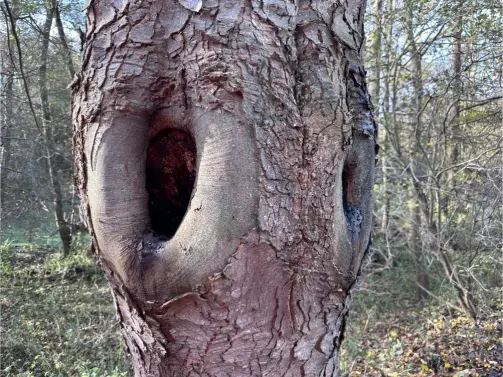
Situated on sloped, soft ground, the tree’s structural integrity could be compromised by heavy winds due to its position and weight distribution. Historical pruning for clearance had left two large wounds at 170cm, each showing signs of decay. Despite healthy reactionary growth, these hollow points raised questions about the tree’s resilience and longevity.
The PiCUS Test
A PiCUS tomography scan at 170cm height aimed to quantify decay levels in the existing cavities. The tomograph revealed that while some decay was present, the tree had compartmentalised effectively at both cavities. No significant internal decay was detected beyond the visible hollow points, and no fungal decay indicators were found. This suggests that the tree is currently in a stable condition with minimal immediate risk of structural failure.

Recommendations and Actions
Despite the low decay risk, proactive management is advised to ensure the ongoing safety of the tree, given its location on a steep embankment over a key access road. Due to the Sycamore’s rapid growth and potential for substantial size increase, MB Trees recommended a crown reduction to reduce the “sail area” and overall weight, minimising failure risk in adverse weather. The team also suggested monitoring regrowth and decay every two years to ensure ongoing safety. Alternatively, Freedom Group may consider replacing the tree with a more suitable species, balancing site safety and visual impact.
Conclusion
This PiCUS assessment highlights the importance of ongoing monitoring and proactive management of trees in high-risk locations. MB Trees, using advanced PiCUS technology, provided Freedom Group with valuable insights for informed, safety-focused decisions. Our professional PiCUS testing services offer peace of mind, ensuring tree safety and longevity for landowners and organisations.